

- This event has passed.
NRF|SAAO Cape Town Open Night
August 22 @ 8:00 pm - 10:00 pm
Join us for Open Nights at the South African Astronomical Observatory (NRF/SAAO) in Cape Town, held on the second and fourth Saturday of every month.
Each evening begins with an engaging presentation on astronomy or a related field of science, followed by a guided tour of the Observatory’s rich history—including our library, museum, and the historic 120-year-old McClean Telescope.
Weather permitting, guests will have the opportunity to enjoy stargazing through the Observatory’s outreach telescopes.
-
- Gates open at 7:30 PM.
- Free entry for children aged 6 and under.
Please email cptbookings@saao.ac.za or call +27 21 447 0025 if you have any queries regarding bookings.
Speaker: Andrew Firth
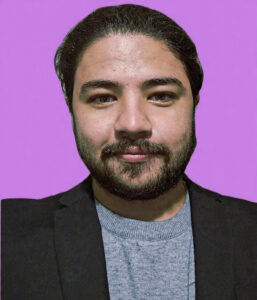
Bio: Andrew Firth is a PhD candidate in Physics at Rhodes University, Makhanda (EC), where he studies the evolution of galaxies in dense environments. His research uses observations from the MeerKAT telescope near Carnarvon (NC), which forms part of the international MeerKAT Fornax Survey, to investigate how galaxies lose and redistribute their neutral hydrogen gas as they interact with the environment of the Fornax cluster of galaxies. His work combines radio observations with optical and ultraviolet data to understand the physical processes shaping galaxies, with a particular focus on ram-pressure stripping and the formation of extended one-sided gas tails. He is interested in how astronomers can use observations across the light spectrum to reconstruct the history and evolution of galaxies that are millions of light-years away.
Abstract: “How Extragalactic Astronomy Is Done”
How do astronomers learn about galaxies that are millions of light-years away? We cannot visit them, touch them, or observe them up close. Instead, we collect faint signals across the light spectrum, turn them into images and measurements, and use these clues to piece together what is happening in a distant galaxy. In this interactive seminar, you will take on the role of astronomers investigating a real galaxy. Starting with observations at different light wavelengths, we will ask what each piece of evidence can tell us about the galaxy, test competing explanations, and see how astronomers use observations, models, and a little detective work to uncover the physical processes shaping this galaxy. The audience will be invited to make predictions and scientific decisions along the way, experiencing how an astronomer moves from a set of observations to a scientific conclusion—and why, in astronomy, the answer is often less straightforward than it first appears.